The Future of Games and Graphics Cards Will be Shaped by DLSS and FSR
The advent of enhancement technologies like DLSS and FSR has led games and graphics cards to surpass their native resolutions. It appears that this trend is widely accepted in the industry.
Nvidia’s DLSS and AMD’s FSR technologies, among others, significantly boost game performance by using artificial intelligence to generate pixels and frames. Some argue that these enhancement technologies create a loophole for developers to release unoptimized games. However, Nvidia disagrees with this perspective; the company claims it plans to focus on DLSS and artificial intelligence in the foreseeable future.
In a lengthy debate over DLSS and ray tracing technology, Nvidia suggests that the industry will eventually move beyond running games at native resolutions. The company sees resolution scaling as a smarter approach rather than relying solely on brute force.
The Future: DLSS, FSR, and XeSS
Solutions like DLSS, FSR, and XeSS minimize image quality loss while significantly increasing frame rates. However, some users believe that manufacturers and game developers are using these tools as an escape route. For instance, Remnant II set a dangerous precedent by listing system requirements assuming players were using enhancements.
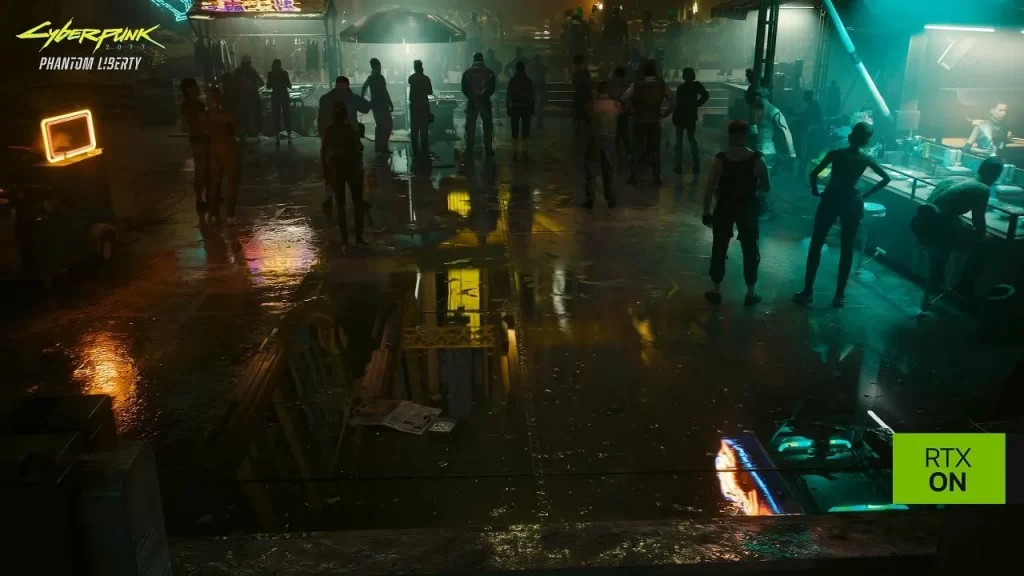
A recent in-depth interview with Nvidia and CD Projekt Red discussed DLSS 3.5’s Ray Reconstruction feature and the new path tracing update for Cyberpunk 2077. The interview also touched on Nvidia’s roadmap.
Bryan Catanzaro, Vice President of Applied Deep Learning Research at Nvidia, stated that rendering at native resolution is no longer necessarily the best option for image or graphics quality. He even emphasized that DLSS 3.5 offers superior visuals compared to native resolution in some scenes. Nvidia and CDPR argue that path tracing fundamentally transforms Cyberpunk’s presentation and is impossible without DLSS. Indeed, even the RTX 4090 struggled to reach 30 FPS at 4K with path tracing enabled.
Enhancement technologies will continue to be the primary focus
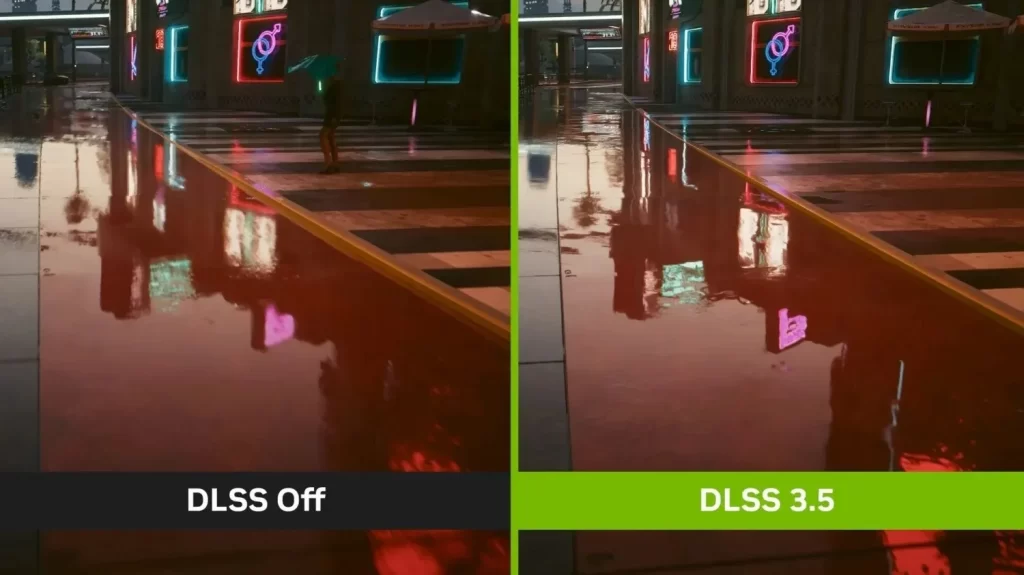
Catanzaro likened native resolution to brute force. Catanzaro and Jakub Knapik from CDPR say that graphics processing has always been filled with “tricks” like mipmapping and Level of Detail. Nvidia CEO Jensen Huang had previously stated that Moore’s Law no longer applied, and therefore, Nvidia’s move away from sheer horsepower seems logical.
Moreover, considering Nvidia’s heavy investments in the field of artificial intelligence and the significant profits it derives from there, these interpretations should be considered. However, enhancement technologies also allow developers to create scenes that would otherwise be impossible, mitigating performance concerns. Of course, some may use this to avoid optimization, but looking a bit into the future is essential.
It’s a fact that many major PlayStation 5 and Xbox Series X games often use enhancements like FSR to upscale from resolutions below 4K. When they reach native 4K, this often results in 30 fps gameplay. This behavior predates the emergence of 4K displays and AI-based upscaling. Games from the previous PlayStation 4 and PlayStation 3 eras often struggled to reach 1080p. The claim that AI techniques improve developers’ ability to compensate for differences in pixel counts is not unfounded.
Final Thoughts
Hello #LavegaCrew,
At Lavega Games, we’re passionate about gaming and technology, and we’re excited to share the latest news with you. We understand that a high-quality gaming experience is important, which is why we strive to provide valuable insights and recommendations based on our extensive industry knowledge and connections. Don’t forget to connect with us on our social media channels where you can stay up to date on our latest projects and share your feedback with us. (Instagram, Reddit, Twitter, and GitHub).
Thank you for being a part of our community!
If you are interested in NFTs and Meta world, don’t forget to check out our LavegaPro website.